Inquiry Post 4: Using AI and LaTeX to Build and Evaluate a Resume
Introduction
Building on my previous inquiry into AI-assisted resume development, I wanted to explore not only how AI can improve resume content, but also how it can help with formatting and presentation. While earlier work focused on comparing tools like ChatGPT and Gemini, this stage of my inquiry focused on using AI to generate a resume in LaTeX and evaluating how it affects both structure and content.
LaTeX is a document preparation system that uses code to format text instead of a traditional visual editor like Microsoft Word. Rather than manually adjusting layout and spacing, users define the structure of a document through code, which allows for more consistent and professional formatting.
What I Did
To begin, I used AI to convert my existing resume into LaTeX format. I prompted different tools to generate clean and professional versions that could be used in Overleaf. The goal was not to change the content, but to improve how it was presented.
After generating the LaTeX code, I tested it in Overleaf and made small adjustments to ensure it compiled correctly and followed a standard resume structure.
Learning LaTeX
Using LaTeX required a different approach compared to tools like Word or Google Docs. Instead of directly editing how the document looks, I had to work with the underlying structure.
At first, simple changes such as spacing or formatting sections were more difficult. However, once I understood how the structure worked, it became easier to maintain consistency across the document.
This showed that LaTeX has a steeper learning curve, but provides more control once understood.
Comparison of AI-Generated LaTeX Resumes
After generating LaTeX versions of my resume using different AI tools, I noticed clear differences in both formatting and content.
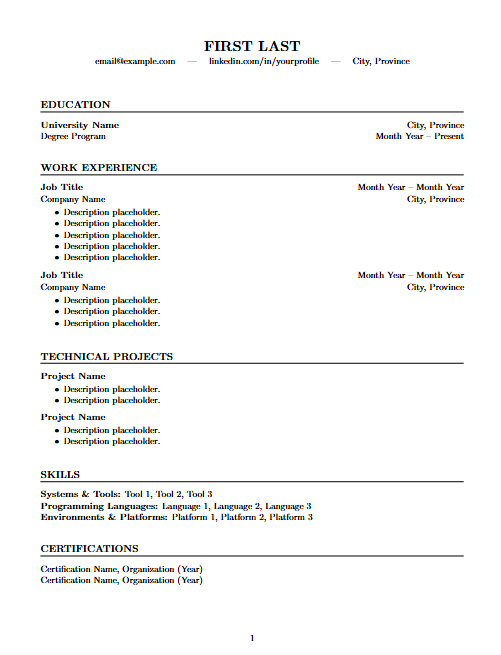
The version generated by ChatGPT focused more on clarity and simplicity. The layout was clean and easy to read, and the wording stayed closer to my original resume. This made it feel more natural and aligned with my actual experience.
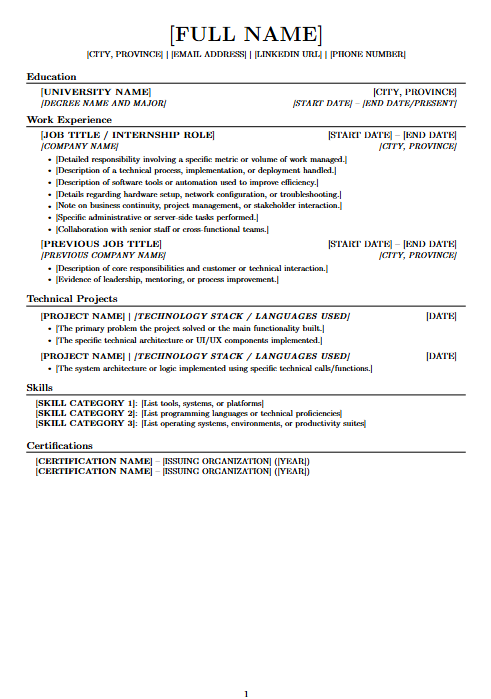
In contrast, the version generated by Gemini used more technical and strategic language. It introduced terms such as “SLA standards” and “Tier 2 escalations,” which made the experience sound more advanced and corporate. While this improved the perceived impact, it also made the resume feel slightly less personal.
From a formatting perspective, both versions were structured well, but Gemini’s version appeared more compact and polished, while ChatGPT’s version was more spaced out and easier to scan.
This comparison made me realize that AI does not just format resumes differently, but can also influence how experience is interpreted and presented.
| Feature | ChatGPT Version | Gemini Version |
| Writing Style | Clear and simple | Technical and strategic |
| Authenticity | Closer to original experience | More enhanced and reworded |
| Readability | Easier to scan | More dense |
| Professional Tone | Neutral | More corporate |
| Formatting | Clean and spaced | Compact and structured |
Observations
Using LaTeX alongside AI highlighted both advantages and limitations.
Advantages:
- Clean and consistent formatting
- More professional appearance
- Structured layout that is easy to maintain
Limitations:
- Harder to make small edits
- Requires learning a new system
- AI-generated output still needs manual adjustments
Connection to Industry Insights
From my previous discussion with an industry professional, one of the key takeaways was that factors such as fit, authenticity, and genuine interest matter more than how polished a resume looks.
This made me reflect on the role of LaTeX and AI together. While these tools can improve presentation and wording, they do not change the actual content or meaning of the resume.
In some cases, stronger or more technical wording may even move away from authenticity, which connects back to the idea of over-optimization discussed earlier.
Additional Insight: AI in Professional Work
Beyond resumes, it was also interesting to hear how AI is being used in real work environments. Tools like Copilot are used to support tasks such as writing proposals and structuring documents. Rather than replacing the work itself, these tools help speed up the process by assisting with drafting and organization.
For example, tasks that may have previously taken a couple of months to complete can now be done in a much shorter time frame, while still relying on the user’s own ideas and input. This shows that AI is not about reducing effort, but about improving efficiency.
This helped me see AI not just as a resume tool, but as something that is actively shaping how work is done.
Reflection
This stage of my inquiry changed how I think about resumes. Initially, I focused on improving wording using AI, but I now see that both content and presentation have their roles.
However, even with better formatting and stronger wording, the most important factor remains whether the resume accurately reflects real experience and genuine interest.
Moving forward, I would use AI and LaTeX as tools to support clarity and presentation, but not as a way to over-optimize or misrepresent my experience.